Inverter vs Non-Inverter AC: Simple Guide for Indian Homes (Savings, Cost and Comfort)
Inverter vs non inverter AC explained: how they work, electricity savings, price difference, cooling comfort and which type suits your room and usage.
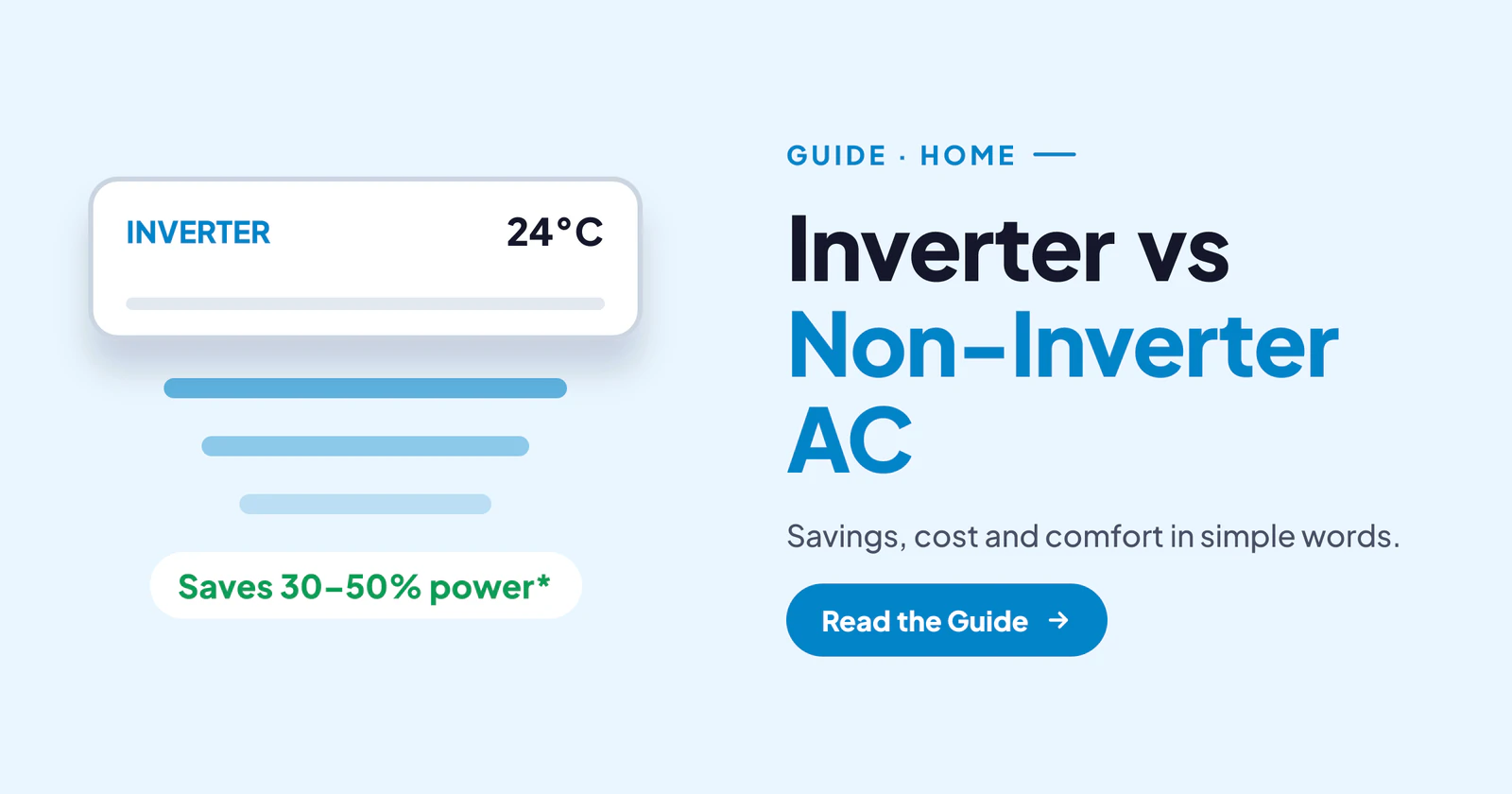
Almost every AC in shops today says "inverter", yet non-inverter models are still sold at lower prices. So what is the real difference, and how much does it matter for your bill? This inverter vs non inverter AC guide explains it simply, with savings examples and clear advice on which one to buy.
- An inverter AC changes its speed to hold the temperature; a non-inverter AC switches fully on and off.
- Inverter ACs often use 30–50% less electricity in regular Indian use.
- If you run the AC for more than a few hours a day, inverter is almost always worth it.
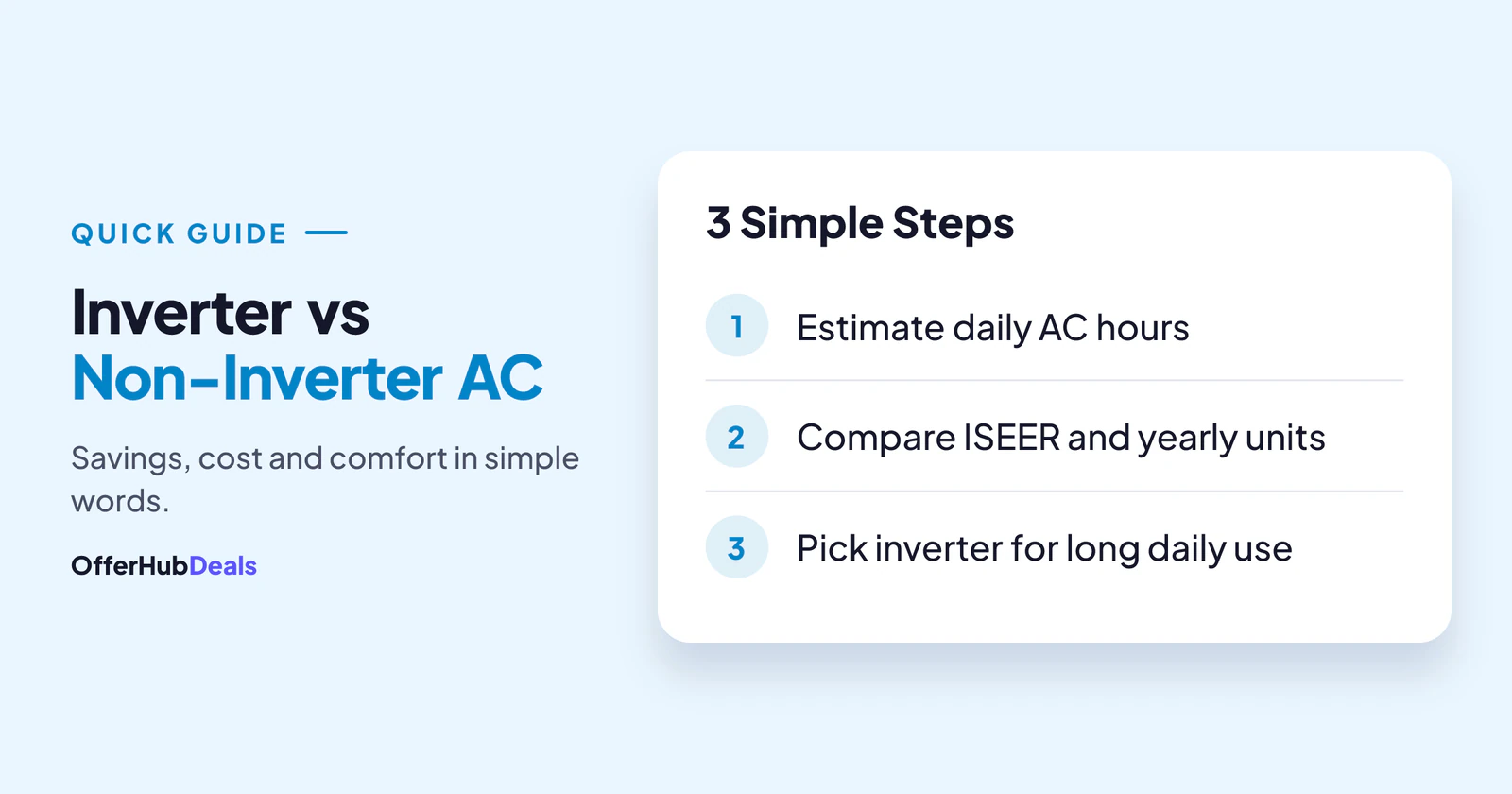
- Compare the ISEER value and yearly units on the BEE label, not just the stars.
How Inverter and Non-Inverter ACs Work
A non-inverter AC works like a light switch. The compressor runs at full power until the room is cool, then switches off, and starts again when it warms up. An inverter AC, on the other hand, works like a car's accelerator. It slows down the compressor once the room is cool and keeps it running gently. As a result, it uses less power and keeps the temperature steady.
Variable speed, steady temperature, lower bills, quieter, handles voltage better. Costs a little more to buy.
Fixed speed, cheaper upfront, simpler technology, but uses more power and the temperature goes up and down.
Inverter vs Non Inverter AC: Electricity Savings
Here is a worked example for a 1.5-ton AC used 8 hours a day for about 6 months a year. Your numbers will differ by model, climate and usage.
| Non-inverter (3 star) | Inverter (5 star) | |
|---|---|---|
| Typical efficiency (ISEER) | Lower | Higher |
| Rough monthly bill at ₹8/unit | About ₹1,600 | About ₹900 |
| Yearly saving (6 months use) | – | Around ₹4,000+ |
So the inverter model can save several thousand rupees a year in this example. Therefore, the higher price usually pays back within a few summers for regular users.
What Is ISEER and Why It Matters
ISEER (Indian Seasonal Energy Efficiency Ratio) shows how efficiently an AC cools across a typical Indian season. Higher ISEER means lower bills. The Bureau of Energy Efficiency revises star ratings every few years, so an old "5 star" may equal a lower rating today. That is why comparing the ISEER and yearly units on the label is more reliable than counting stars.
When a Non-Inverter AC Still Makes Sense
- Very low use, such as a guest room used a few days a year.
- Tight budget where the upfront price matters more than the bill.
- Short-term use, like a rented home you will leave soon.
For daily use in summer, however, an inverter AC is the better long-term buy.
Tips to Save More With Any AC
- Set 24–26°C. Every degree lower increases power use.
- Clean the filters every few weeks in summer.
- Use a ceiling fan with the AC to spread cool air. A BLDC fan adds very little to the bill.
- Close doors and curtains to keep the cool air in.
- Get yearly servicing before summer starts.
Inverter vs Non Inverter AC for Small and Large Rooms
For a small bedroom, a 1-ton inverter AC is usually enough, and it saves the most because it runs at low speed most of the night. For a large living room, a 1.5-ton or 2-ton inverter AC avoids running at full power all the time. On the other hand, an undersized non-inverter AC works hard non-stop, which raises the bill and wears it out faster. So match the tonnage to the room first, then choose inverter.
Final Word
In the inverter vs non inverter AC choice, inverter wins for almost everyone who uses an AC regularly: lower bills, steadier cooling and quieter running. Non-inverter only makes sense for very low or short-term use. Compare ISEER and yearly units on the label, and buy during sales for the best price. Check our home and kitchen deals and the Amazon deal finder before you buy.
Savings are worked examples using typical efficiency and ₹8 per unit, as of October 2026. Actual bills depend on climate, room size and usage.
Frequently asked questions
What is the difference between inverter and non-inverter AC?
An inverter AC changes compressor speed to hold the temperature, while a non-inverter AC switches fully on and off. Inverter uses less power.
How much does an inverter AC save?
Often 30–50% less electricity in regular use, which can mean several thousand rupees a year for daily summer use.
Is a non-inverter AC ever a good choice?
Only for very low or short-term use, like a guest room or a rented home you will leave soon.
What is ISEER in an AC?
It is the Indian Seasonal Energy Efficiency Ratio. A higher ISEER means lower electricity bills.