Flipkart Pay Later vs No-Cost EMI: Which One Should You Use in the 2026 Sale?
Flipkart Pay Later vs no-cost EMI compared: how each works, costs, credit limits and risks, so you know which to use for your next sale purchase.
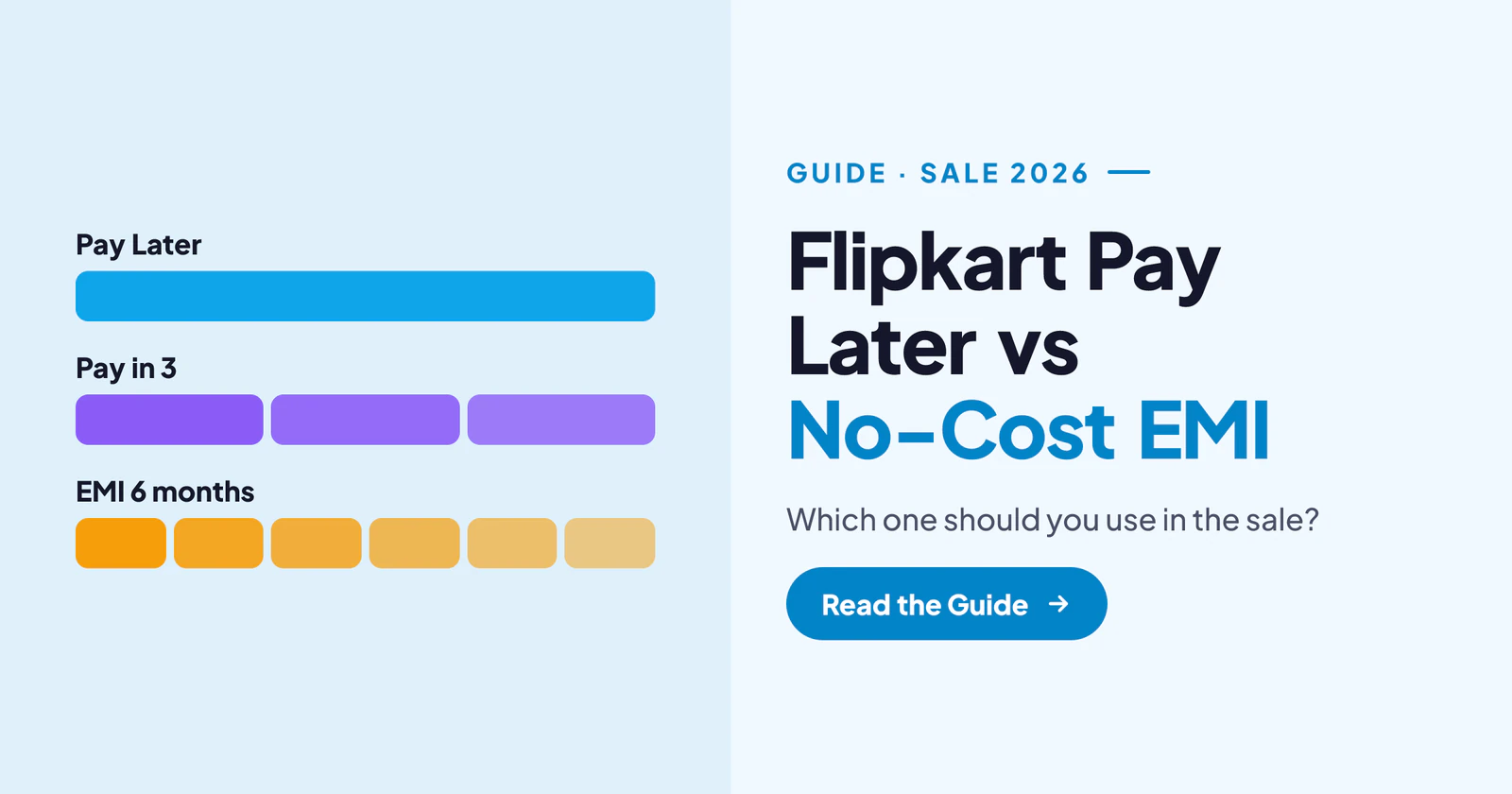
Flipkart now offers two big ways to "pay later": its relaunched Flipkart Pay Later and the familiar no-cost EMI on cards. Both feel like free money, but they work differently. This Flipkart Pay Later vs no-cost EMI guide explains each in plain words, so you pick the right one for your sale purchase.
What Is Flipkart Pay Later (2026)?
Flipkart relaunched Pay Later in mid-2026 with PayU Finance as the lender. According to Flipkart's announcement, it offers:
It works on Flipkart, Myntra and Flipkart Minutes. Read the full terms in the app before you activate it.
What Is No-Cost EMI?
No-cost EMI lets you split a price into monthly payments on your credit card (and some debit cards), with the interest covered by a discount from the seller or brand. However, banks may charge a processing fee and GST on the interest part. Our explainer on whether no-cost EMI is really free shows the maths.
Flipkart Pay Later vs No-Cost EMI: Side by Side
| Flipkart Pay Later | No-cost EMI | |
|---|---|---|
| Needs a credit card? | No | Usually yes |
| Best for | Small to mid purchases, short gap | Big purchases like phones, TVs |
| Interest | Free within the cycle or Pay in 3 | Covered by discount, but fees may apply |
| Bank offers | May not combine with card offers | Often combines with card offers |
| Risk | Late fees, credit score impact if missed | Processing fee, card limit blocked |
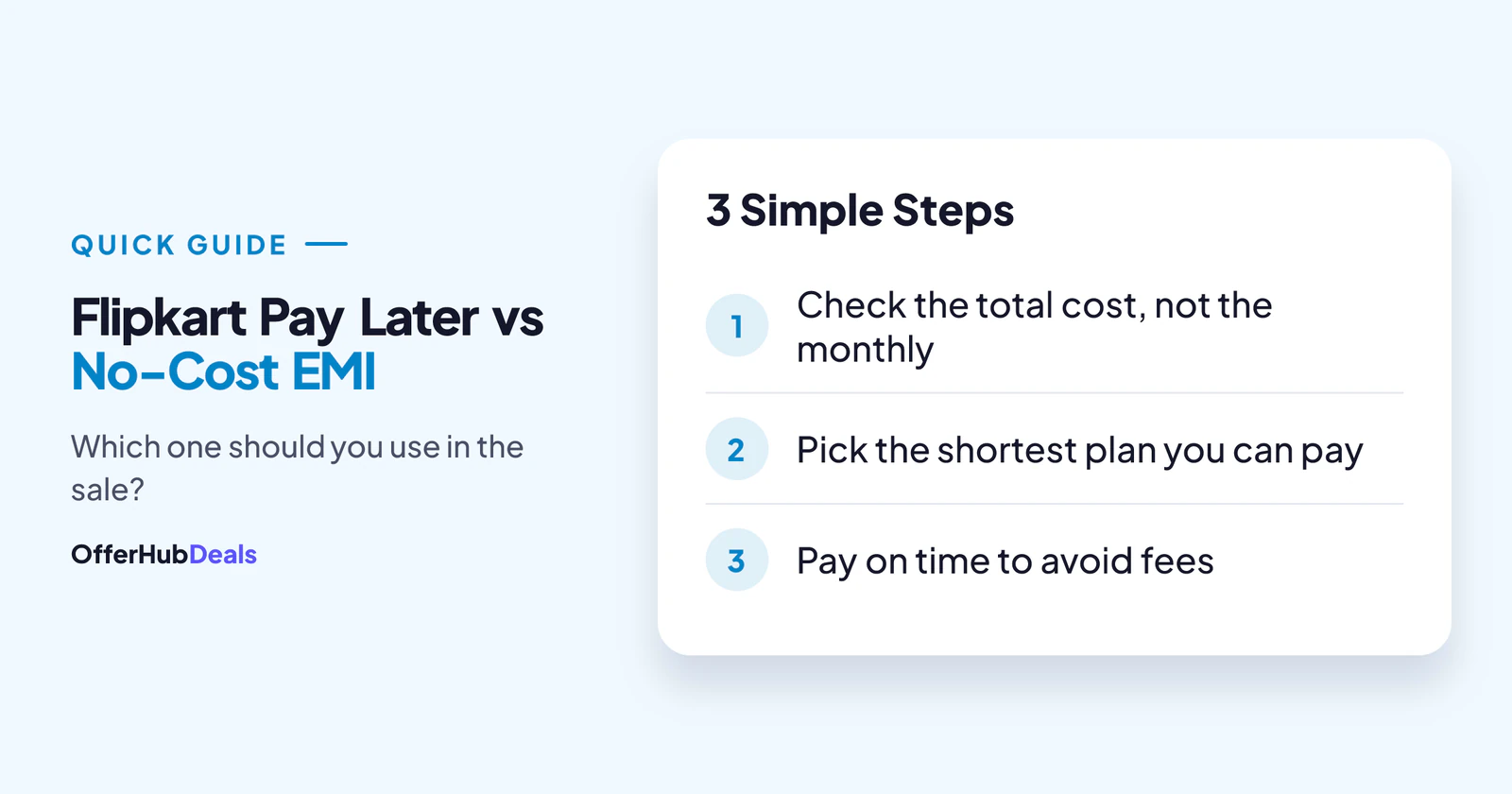
Flipkart Pay Later vs No-Cost EMI: Which Should You Use?
you don't have a credit card, the purchase is small, and you can repay within 30 days or in three parts.
it is a big purchase, you hold a card with a sale bank offer (Axis or ICICI on Flipkart this year), and the processing fee is small.
Flipkart Pay Later vs No-Cost EMI: Watch Out For These
- Late payments can bring fees and hurt your credit score. Set a reminder.
- Bank offers may not apply when you pay with Pay Later instead of the partner card.
- Too many small EMIs add up. Keep a list of what you owe each month.
A Simple Worked Example
Say you buy a ₹30,000 phone. With a 6-month no-cost EMI on an eligible card, you pay about ₹5,000 a month, plus any processing fee the bank charges. In addition, if your card is an Axis or ICICI card, the 10% sale offer may still apply. On the other hand, with Pay in 3 on Flipkart Pay Later (if your limit allows), you pay about ₹10,000 three times, interest-free, but the card bank offer may not apply. So, in this example, the card EMI could be cheaper overall if you hold the right card. These numbers are only an example; check the real terms in the app.
Final Word
In the Flipkart Pay Later vs no-cost EMI choice, Pay Later suits small purchases and people without credit cards, while no-cost EMI suits big buys where a card bank offer also applies. Either way, compare the total cost, pick the shortest plan you can afford and pay on time. For sale details, read our Big Billion Days 2026 guide and the bank offers cheat sheet. Flipkart's announcement has the official details.
Based on Flipkart's 2026 Pay Later announcement and general EMI rules as of October 2026. Terms, fees and limits are set by the lender; read them in the app.
Frequently asked questions
Which is better, Flipkart Pay Later or no-cost EMI?
Pay Later suits small purchases and people without credit cards. No-cost EMI suits big purchases where a card bank offer also applies.
Is Flipkart Pay Later interest-free?
Flipkart says Pay Later is interest-free if you pay within the billing cycle, and Pay in 3 offers interest-free instalments.
What is the Flipkart Pay Later limit?
Flipkart says credit of up to ₹1 lakh is available, depending on your profile.
Is no-cost EMI really free?
The interest is covered by a discount, but banks may charge a processing fee and GST, so check the total cost.